The problem is usually the lighting system inside the sign cabinet, not the sign itself. That means most fluorescent pylon signs can be converted to LED without replacing the existing structure. A retrofit upgrades the lighting while keeping the sign you've already invested in.
We've helped Arkansas businesses maintain illuminated signs for decades. In this guide, we'll explain how to tell whether your pylon sign is a good candidate for an LED retrofit, what the conversion process involves, what factors affect the overall cost, and when replacing the entire sign is the better long-term investment.
Key Takeaways
- Most pylon signs with dim, flickering, or uneven lighting can be retrofitted with LED without replacing the entire sign.
- An LED retrofit improves brightness, reduces energy use, and eliminates many of the maintenance issues associated with fluorescent lighting.
- The right choice depends on the condition of your sign cabinet, electrical components, and your long-term goals. In some cases, replacement is the better investment.
- You can safely inspect visible parts of your sign, but electrical work beyond the disconnect switch should always be handled by a licensed sign professional.
What Is a Pylon Sign LED Retrofit?
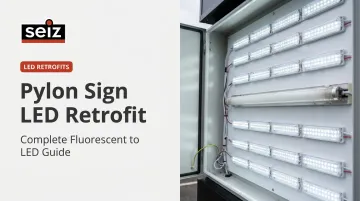
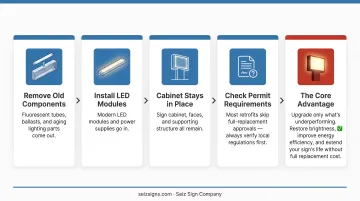
A pylon sign LED retrofit replaces the fluorescent lighting inside your existing sign with a modern LED lighting system. The fluorescent tubes, ballasts, and other aging lighting components are removed and replaced with LED modules and their power supplies.
The sign itself doesn't change. Your sign cabinet, faces, and supporting structure all stay in place. Only the lighting system inside is upgraded.
| What stays | What goes |
|---|---|
| The cabinet and its faces | Fluorescent tubes |
| The pole and structure | Ballasts |
| Your existing sign permits | Aging internal wiring |
*Permit requirements vary. Because most retrofits don't change the size or structure of the sign, they often don't require the same approvals as a full sign replacement. Always check your local regulations before beginning work.
The biggest advantage of a retrofit is that you're upgrading only the part of the sign that's no longer performing well. If the cabinet and structure are still in good condition, replacing the lighting system can restore brightness, improve energy efficiency, and extend the life of your existing pylon or freestanding sign without the cost of installing a completely new one.
Why Fluorescent Pylon Lighting Ages the Way It Does
A fluorescent pylon sign relies on two main components to produce light: fluorescent tubes and ballasts. The tubes provide the illumination, while the ballasts regulate the electricity that powers them.
Over time, both components wear out. As the tubes become dimmer and less efficient, the ballasts also begin to fail. Because they're installed at the same time and have been operating together for years, they often reach the end of their lifespan around the same period. That's why fluorescent signs rarely develop just one lighting issue. Instead, dim sections, flickering lights, and complete outages tend to appear together.
There's another factor to consider. As the sign industry has shifted toward LED technology, fluorescent tubes and replacement ballasts have become harder to source. Finding compatible parts is often more difficult and may increase repair times or costs.
The good news is that these systems usually show clear signs of wear before they fail completely. At Seiz Signs, we can often identify the problem with a thorough inspection of the lighting system and help you determine whether a repair, an LED retrofit, or a full sign replacement is the better long-term solution.
Signs Your Pylon Sign Is Ready for an LED Retrofit
Fluorescent pylon signs announce their needs in a handful of recognizable ways, and the symptom usually points to the source. Here is the quick read:
| Symptom | What it usually means |
|---|---|
| Dark patches on the face | Individual tubes reaching end of life |
| Flickering sections | A ballast wearing out or a tube on its way |
| A whole face dark | A failed ballast or an electrical feed issue |
| Repairs arriving closer together | The system aging as a set, retrofit territory |
Watch for More Frequent Repairs
A single repair doesn't necessarily mean it's time for an LED retrofit. What matters is whether those repairs are becoming more frequent.
As fluorescent lighting systems age, individual components begin to fail one after another. You might replace a tube today, then a ballast a few months later, followed by another failed tube shortly after that. Each repair restores part of the system, but the remaining components continue to age.
It's also important to consider the cost beyond replacement parts. Every service visit requires equipment, access to the sign, and technicians working at height. Over time, those recurring service calls can cost more than upgrading the lighting system altogether.
If the time between repairs is getting shorter, it's often a sign that the fluorescent system has reached the end of its practical service life. Rather than continuing to replace individual components, an LED retrofit may provide a more reliable and cost-effective long-term solution.
What You Can Safely Check Before Calling Us
We don't recommend troubleshooting the inside of a pylon sign yourself. Electrical components, high-voltage wiring, and elevated sign cabinets are best left to an experienced sign technician.
That said, there are a few simple checks you can perform from the ground before scheduling a service call. They won't solve every problem, but they may help rule out some of the most common causes and give your sign technician a clearer picture of what's happening.
- Check the breaker and fuse. A tripped breaker or blown fuse can interrupt power to the sign and is one of the simplest issues to identify.
- Check the timer or photocell. If your sign operates on a timer or dusk-to-dawn sensor, confirm the settings haven't changed and the photocell isn't blocked by dirt or debris. Power outages can sometimes reset timers without you noticing.
- Make note of the symptoms. Does the sign flicker at startup? Does it go dark after it's been on for a while? Does the problem only appear during certain weather conditions? These details can help speed up the diagnosis.
- Inspect the sign from the ground. Look for dark sections, uneven lighting, or visible damage, but don't open the sign cabinet or attempt any electrical repairs yourself.
Why a Pylon Retrofit Isn’t a DIY Job
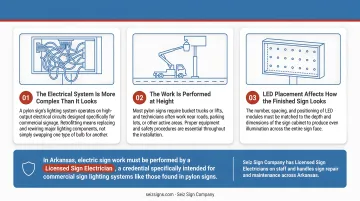
A pylon retrofit is one of those projects where the gap between watching it done and doing it is widest, for three reasons:
- The electrical system is more complex than it looks. A pylon sign's lighting system operates on high-output electrical circuits designed specifically for commercial signage. Retrofitting the sign means replacing and rewiring major lighting components, not simply swapping one type of bulb for another.
- The work is performed at height. Most pylon signs require bucket trucks or lifts, and technicians often work near roads, parking lots, or other active areas. Proper equipment and safety procedures are essential throughout the installation.
- LED placement affects how the finished sign looks. An LED retrofit isn't just about making the sign light up. The number, spacing, and positioning of the LED modules must be matched to the depth and dimensions of the sign cabinet to produce even illumination across the entire sign face.
In Arkansas, electric sign work must be performed by a Licensed Sign Electrician, a credential specifically intended for commercial sign lighting systems like those found in pylon signs.
In other words, call Seiz Sign Company. We have Licensed Sign Electricians on staff and handle sign repair and maintenance across Arkansas.
LED Retrofit or Full Replacement: How to Decide
The right choice depends on what's causing the problem. Below are some questions to help your decision:
| Condition | Recommended Solution |
|---|---|
| Lighting system failing, cabinet and structure in good condition | LED retrofit |
| Sign will continue to represent your business for years to come | LED retrofit |
| Business has rebranded or needs a new design | Full sign replacement |
| Cabinet or supporting structure is no longer structurally sound | Full sign replacement |
If you're unsure which option is right for your sign, the team at Seiz Signs can inspect the cabinet, lighting system, and structure before making a recommendation. Our goal is to help you choose the solution that makes the most sense for your business, not simply the more expensive one.
How We Handle Pylon Sign Retrofits at Seiz
Every retrofit begins with a thorough inspection of the existing sign. We evaluate the condition of the cabinet, lighting components, wiring, and electrical system before recommending a solution. This helps us determine whether an LED retrofit is the right choice or if a full sign replacement would provide better long-term value.
Once the inspection is complete, our team performs the retrofit from a lift, replacing the fluorescent lighting system with new LED modules and power supplies inside the existing cabinet.
One of the most common questions we hear is whether an LED retrofit will disrupt normal business operations. In most cases, it won't.
Because the existing sign cabinet and structure remain in place, there's no need to remove the sign or disturb the surrounding property. The work is completed on-site, allowing your business to continue operating as usual throughout the retrofit.
When the work is complete, your sign delivers brighter, more even illumination with lower energy consumption and fewer maintenance requirements.
If your pylon sign is showing any signs of wear, don't wait for the lighting system to fail completely. Call Seiz Signs at (501) 623-3181, and we'll take it from there.
How Much Does a Pylon Sign LED Retrofit Cost?
The best way to understand the cost of your retrofit is through a professional evaluation. Once the sign has been inspected, the Seiz Signs team can provide a detailed quote based on its size, condition, and the scope of work required.
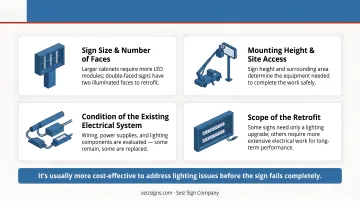
Some of the biggest factors that affect the overall cost include:
- Sign size and number of faces. Larger cabinets require more LED modules, and double-faced signs have two illuminated faces that need to be retrofitted.
- Mounting height and site access. The height of the sign and the surrounding area determine the type of equipment needed to complete the work safely.
- Condition of the existing electrical system. During the inspection, we'll evaluate the wiring, power supplies, and other lighting components to determine what can remain and what should be replaced as part of the retrofit.
- The scope of the retrofit. Some signs only require a straightforward lighting upgrade, while others need more extensive electrical work to ensure long-term performance.
One thing we've learned over the years is that it's usually more cost-effective to address lighting issues before the sign fails completely.
Frequently Asked Questions
How long do LED sign retrofits last?
A professionally installed LED retrofit can provide many years of reliable performance with significantly less maintenance than a fluorescent lighting system. Because LED modules last much longer than fluorescent tubes, most businesses also benefit from fewer service calls and lower ongoing maintenance costs.
Can every fluorescent pylon sign be converted to LED?
Most fluorescent pylon signs can be retrofitted with LED. The deciding factors are the condition of the sign cabinet, wiring, and electrical system. A professional inspection can confirm whether your sign is a good candidate for an LED retrofit or if a full replacement is the better option.
Will my sign look different after the retrofit?
The appearance of your sign remains the same. Your existing cabinet, sign faces, and branding stay in place. The difference is the lighting behind the sign, which becomes brighter, more even, and more energy efficient.
How long does a pylon sign retrofit take?
Most LED retrofits can be completed much faster than a full sign replacement because the existing cabinet and structure remain in place. The exact timeline depends on the size, condition, and complexity of your sign, and your sign company should provide an estimated schedule before work begins.
Do I need a new permit for an LED retrofit?
In many cases, no. Because an LED retrofit typically upgrades the lighting system without changing the size or structure of the sign, it often doesn't require the same permits as a new sign installation. Permit requirements vary by location, so it's always best to confirm with your local municipality or sign professional before work begins.