Channel letters are the go-to choice for that first impression, and for good reason. They're bold, professional, and visible from blocks away, day or night. But if you've never bought a sign before, terms like "raceway mount" or "halo-lit" can turn a simple sign order into a confusing maze.
This guide breaks down exactly what channel letters are, how they're built, the different types available, and how to choose the right option for your storefront.
Key Takeaways
- Channel letters are custom-fabricated, illuminated letters made from aluminum and acrylic for 24/7 visibility.
- Three lighting styles exist: face-lit, halo-lit, and combination-lit, each with a distinct visual effect.
- Mounting choice (raceway, direct, or backer) affects cost, building impact, and appearance.
- A licensed sign company ensures UL-approved components, permit compliance, and long-term durability.
What Is a Channel Letter Sign?
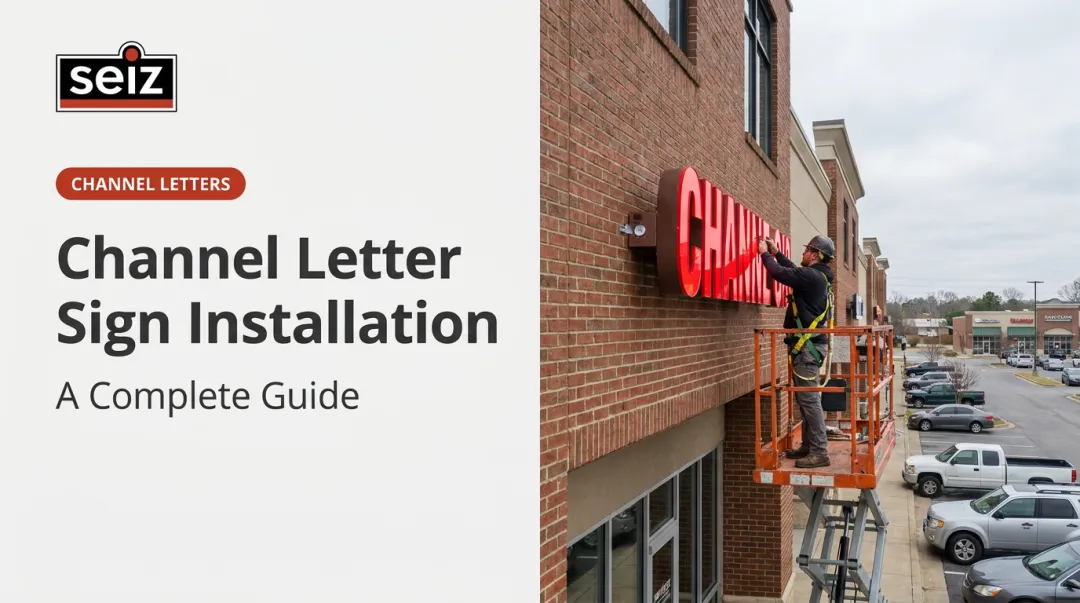
A channel letter sign is a custom-fabricated, three-dimensional letter, number, or logo that's individually illuminated and combined with others to spell out a business name or brand. Unlike a flat cabinet sign, each letter is its own self-contained unit with depth, structure, and (usually) its own light source.
The Three Structural Components
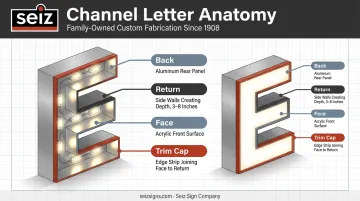
Every channel letter is built from three core parts:
- Back: An aluminum sheet cut into the letter's shape using a router or laser, forming the rear panel.
- Return: The sides of the letter, bent to create depth. Returns typically run 3 to 8 inches, though shallower options exist as LED technology has advanced.
- Face: The front surface, usually acrylic or polycarbonate, that light shines through (or off of, depending on the style).
A trim cap, a narrow strip of plastic or metal, bonds the face to the return along the edge. It creates a clean, finished look and protects the seam from weather intrusion.
Why Aluminum and Acrylic
These materials dominate the industry for practical reasons:
- Aluminum resists rust and holds up to weather extremes without warping.
- Acrylic offers color flexibility through Pantone matching or vinyl overlay, so your sign matches your brand palette precisely.
- Both materials are lightweight enough for wall mounting but strong enough to last for years outdoors.
LEDs Have Replaced Neon
Older channel letters used neon tubing, which required deeper returns to house the glass tubes safely. LED modules changed that. According to a 2019 report from Sign Builder Illustrated, most channel-letter signs used LEDs, positioned only a few inches from the face in many applications.
That compact footprint is why letter depth has trended shallower over time, from the older 5-6 inch returns common with neon toward 2-3 inch returns on many modern LED-lit installations. LEDs also run cooler and consume less power per letter, which matters if your sign stays lit every night of the year.
The Three Types of Illuminated Channel Letters
Not all channel letters glow the same way. The lighting style you choose changes the entire look of your storefront.
Face-Lit (Front-Lit) Channel Letters
This is the classic, most recognizable channel letter style. Light shines directly through a translucent acrylic face, making the letter itself glow. Face-lit letters are:
- The most cost-effective illuminated option
- Highly readable at night and from a distance
- The default choice for high-traffic retail corridors
Reverse-Lit (Halo/Back-Lit) Channel Letters
Here, the face is opaque aluminum, and the light points backward instead. The result is a soft glow, or "halo," that radiates around the letter against the building wall. Halo-lit signs read as more modern and upscale, which is why boutique retailers and upscale restaurants often choose them.
One caveat worth knowing: halo-lit signs perform best on light-colored, matte facades. According to a supplier guide on reverse-lit channel letters, glossy, chrome, or mirrored surfaces can reflect individual LED modules as visible pin dots instead of an even glow. If your building has a dark brick or reflective metal exterior, face-lit or combination-lit may serve you better.
Combination-Lit Channel Letters
This style illuminates both the face and the back at once. You could run a colored face with a white halo behind it, giving you two visual effects in a single letter. It's the most eye-catching option, but it also carries the most components and the highest price tag of the three.
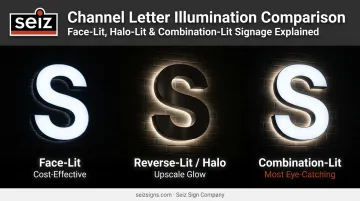
Seiz Sign Company fabricates all three lighting styles in-house, matching the right method to your facade and budget before our licensed electricians handle installation.
Not ready for illumination at all? Non-illuminated channel letters exist too. They're a lower-cost, daytime-only option worth considering if your business closes before dark or your budget is tight for now.
Channel Letter Mounting Options
How a channel letter attaches to your building matters almost as much as how it lights up. Three mounting methods dominate the industry.
Raceway Mount
A raceway is a metal box that houses the wiring and power supply behind the letters. The whole assembly attaches to the building as one unit.
- Requires minimal facade drilling, just a few holes for the raceway itself
- Often preferred (or required) by landlords and property managers because it leaves fewer holes in the building
- Leaves the box slightly more visible than other mounting methods, since it sits behind the letters
Direct (Flush) Mount
Each letter attaches straight to the building facade, with wiring run individually behind the wall. This creates a sleeker, more integrated look, since there's no visible box.
- Commonly used for reverse-lit letters, mounted on standoff spacers to create the halo effect
- Requires more wall penetrations than a raceway, since each letter needs its own access point
- Adds long-term maintenance costs, since each letter needs individual servicing behind the wall
Backer Mount
Letters mount onto a panel or cabinet larger than the letter set itself. The backer acts as a design frame and houses the electrical components in one place.
- Useful for covering up damage or unevenness from a previous sign
- Adds visual contrast, especially when the backer color differs from the wall
- Works well for retrofits over damaged or uneven walls that can't support direct mounting
| Mounting Type | Facade Penetrations | Best For |
|---|---|---|
| Raceway | Minimal | Landlord-required installs, easy service access |
| Direct/Flush | Multiple | Clean, integrated look; halo-lit letters |
| Backer | Minimal (one panel) | Uneven facades, added contrast |
As a licensed electrical sign contractor, Seiz Sign Company evaluates your facade, landlord requirements, and design goals on-site to recommend the mounting method that fits your building best.
Benefits of Channel Letter Signs for Your Business
Channel letters pull real marketing weight for your business every day.
- Round-the-clock visibility. An illuminated sign attracts attention from open to close without adding a single staffing hour or ad dollar.
- Durability with low upkeep. Quality aluminum and acrylic construction shrugs off heat, wind, and rain for years with minimal repairs.
- Design flexibility. Custom fonts, colors, and sizes let retail, restaurant, healthcare, and hospitality businesses alike reinforce their exact brand identity.
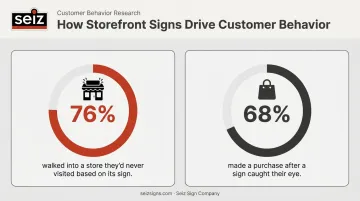
The impact of exterior signage on customer behavior isn't just anecdotal, either. According to a 2012 FedEx Office survey of 1,000 U.S. adults, 76% had walked into a store they'd never visited before based solely on its sign.
Another 68% had made a purchase after a sign caught their eye. That survey covered signage generally, not channel letters specifically, but the point stands: your sign is doing sales work whether you realize it or not.
Choosing the Right Channel Letter Sign for Your Business
Before you settle on a design, work through these practical checkpoints.
Check Your Lease and Local Codes First
Letter height, depth, and placement are frequently regulated by:
- Lease agreements and landlord sign criteria
- HOA rules for commercial developments
- Municipal zoning and sign ordinances, which can vary block by block
Insist on Licensed, Code-Compliant Installation
Electric signs fall under UL 48, the safety standard covering custom electric signs, including channel letters. Skipping this step risks a failed inspection or a sign that gets shut down after installation.
Seiz Sign Company's team includes Licensed Sign Electricians and Certified Welders who handle design, fabrication, permitting, and installation in-house across Arkansas. That means no gap between the person who designs your sign and the person wiring it to code.
Prioritize Materials Over the Lowest Bid
A cheaper quote often means thinner aluminum, lower-grade acrylic, or LED modules with weak warranties. Ask about:
- Colorfast acrylic rated for long-term outdoor exposure
- Proper-gauge aluminum for the returns and back
- LED modules backed by a real manufacturer warranty
Work With an Established, Full-Service Sign Partner
A sign company that only fabricates, or only installs, leaves you managing the gaps yourself. Seiz Sign Company has operated as a family-run business since 1908, more than 118 years serving Hot Springs and Garland County businesses from concept through installation and ongoing maintenance.
Frequently Asked Questions
What is a channel letter sign?
A channel letter sign is an individually fabricated, three-dimensional letter or logo made of aluminum and acrylic, typically illuminated with LEDs. Businesses use them for exterior storefront branding.
What are channel letters made of?
The back and returns are aluminum, chosen for rust resistance and durability. The face is acrylic or polycarbonate, joined to the return with a trim cap.
How much do channel letters cost?
Pricing depends on letter size, depth, illumination type, and mounting method. Every channel letter sign is custom-quoted based on your specific project.
Do channel letter signs require a permit?
Most municipalities require sign and electrical permits, and many lease agreements add their own criteria on top. Seiz Sign Company handles permit research and code compliance for projects across Arkansas, so check with your sign contractor before finalizing any design.
What is the difference between face-lit and halo-lit channel letters?
Face-lit letters glow from the front through a translucent acrylic face. Halo-lit letters use an opaque face and direct light backward, creating a glow around the letter against the wall.
How long do channel letter signs last?
Quality channel letters with LED illumination and durable materials can last for many years with minimal maintenance. Professional installation by a licensed sign electrician makes a significant difference in longevity.