Research from the Sign Research Foundation shows that 61% of consumers have failed to find a business because its sign was too small or unclear, and 75% notice a sign before anything else about a property. Those numbers make exterior building identification a functional necessity, not an aesthetic afterthought.
This guide covers the five main types of building identification signs, the code and compliance standards that govern them, and a practical framework for choosing the right solution for any property in Arkansas or beyond.
Key Takeaways
- A building identification sign identifies a structure by name, address, or ownership — it is distinct from promotional or advertising signage.
- The five main types are channel letter signs, cabinet/lightbox signs, monument signs, dimensional letters/plaques, and blade signs.
- Local zoning ordinances govern size, height, illumination, and setbacks — always verify with your municipality before fabrication begins.
- The right sign type depends on viewing distance, architecture, mounting surface, and illumination requirements.
What Is a Building Identification Sign?
A building identification sign displays only the name, address, or ownership of a specific structure. Unlike commercial advertising signs, it identifies the structure itself — not the products or services inside. Zoning codes treat these two sign types as separate categories, with different rules governing permitted sizes, heights, and illumination.
These signs are most critical wherever people must locate a specific building among several on a property:
- Multi-tenant office parks and commercial developments
- Medical campuses and healthcare facilities
- Hotels and hospitality properties
- Schools, universities, and government buildings
- Retail centers with multiple anchor tenants
When building identification fails, the costs are measurable. Emergency responders lose time locating the correct entrance. The 2024 International Fire Code Section 505.1 requires approved address identification visible from the street with a minimum 4-inch character height — a standard written specifically because delayed access costs lives. Customers leave for better-signed competitors. In shared complexes, businesses with inadequate signage lose foot traffic to neighbors whose signs are simply easier to read.
Main Types of Building Identification Signs
No single sign type fits every building. The right choice depends on the structure's architecture, its distance from the road, available mounting surfaces, and local zoning. Here are the five most common types.
Channel Letter Signs
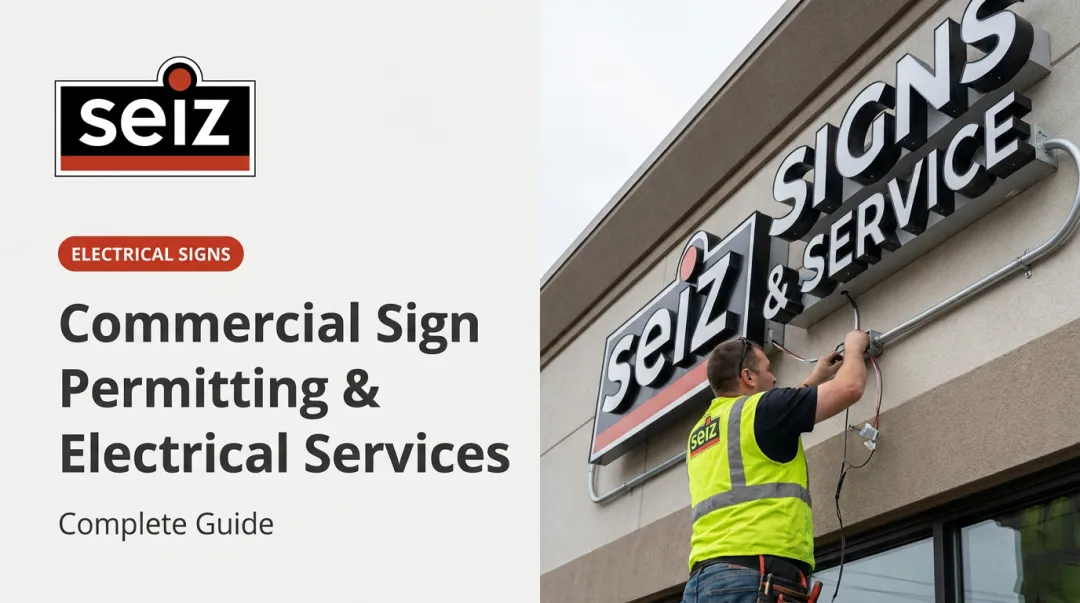
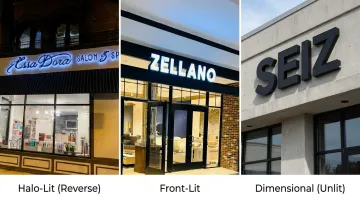
Channel letters are individual three-dimensional letters fabricated from aluminum with acrylic faces, mounted directly to a building's façade. LED modules inside each letter provide illumination. Three variants exist:
- Front-lit (regular): The letter face glows
- Halo-lit (reverse channel): Light projects onto the wall behind the letter, creating a backlit halo effect
- Unlit: No illumination; relies on depth and material for visual impact
Each letter is a separate unit, allowing precise font, color, and size matching to brand guidelines. The result is a premium, custom appearance that flat or cabinet signs can't replicate. Quick-service restaurants and pharmacy chains frequently specify channel letters as their standard across all locations.
Best suited for: Retail storefronts, restaurants, hotels, professional office buildings, and national brand rollouts on flat façades with electrical access.
Trade-offs: Higher fabrication and installation cost than simpler sign types. Illuminated channel letters require a licensed sign electrician for installation and electrical inspection sign-off. Individual letters require more precise placement and occasional per-letter LED maintenance.
Seiz Sign Company fabricates all three channel letter variants in-house and uses UL-approved components as a standard specification — not an optional upgrade — on every illuminated installation.
For properties where a single sealed unit is simpler to install and maintain, a cabinet sign is often the practical alternative.
Cabinet (Lightbox) Signs
A cabinet sign is a weatherproof aluminum box enclosing LED lighting behind a translucent acrylic or polycarbonate face. The entire face illuminates uniformly, producing high visibility in low-light conditions and at distance. Face options include flat polycarbonate with printed graphics, embossed pan faces, routed aluminum, and flex faces.
Unlike channel letters with their multiple individual components, a cabinet sign is a single sealed unit — simpler to install, more resistant to weather infiltration, and lower maintenance overall.
Best suited for: Gas stations, strip malls, shopping centers, and properties requiring maximum nighttime visibility from a parking lot or road.
Trade-offs: The "box" aesthetic reads as utilitarian. It may not suit architecturally distinctive buildings or upscale professional environments where visual refinement matters.
Monument Signs
What they are: Low-profile freestanding signs installed near a property entrance, typically 4–8 feet tall, using durable materials such as concrete, brick veneer, aluminum cabinets, or stone veneer. Many include changeable letter panels or LED message displays.
Why they stand out: Monument signs are ground-level landmarks visible to drivers and pedestrians approaching the property entrance — they function as a directional marker, not just a name on a wall. They carry a sense of permanence that wall-mounted signs cannot replicate.
Best suited for: Office parks, medical campuses, schools, hotels, and multi-tenant properties where the building sits back from the road. In some Arkansas municipalities — including the Malvern Avenue Overlay District (Hot Springs, HWY 270) and the Cantrell West Overlay District (Little Rock, HWY 10) — monument signs are specifically required for commercial businesses.
Trade-offs: Requires concrete footings, structural calculations, and permits. Higher upfront cost than wall-mounted options. Seiz Sign Company's permit services include drawings and structural calculations as part of the permit package for monument sign projects.
Dimensional Letters and Plaques
Dimensional letters and plaques are individual characters or cast panels fabricated from metal (aluminum, brass, bronze, stainless steel) or precision-cut acrylic, mounted flush or with a standoff for a raised, sculptural appearance. Not internally illuminated, though external accent lighting can be added.
Where channel letters project energy, dimensional letters project authority. They rely on depth, shadow, and material quality for visual impact — delivering a refined, institutional look that reads as permanent. For clients where understated authority matters more than roadside visibility, this is often the right choice.
Material options from Seiz Sign Company include:
- Cast bronze (patina options: statuary brown, oxidized brown, satin)
- Cast aluminum (powder coat or anodized finish)
- Precision-cut acrylic in numerous fonts, sizes, and colors
- Stainless steel and brass for specialty applications
Best suited for: Law firms, corporate headquarters, universities, government buildings, hospitals (donor recognition walls), and any property where a formal, permanent appearance is the priority.
Trade-offs: Limited nighttime visibility without supplemental lighting. Not appropriate for high-traffic roadside identification where illumination is essential.
Blade (Projecting) Signs
What they are: Signs that extend perpendicular to the building wall, mounted above eye level and readable to pedestrians approaching from either direction along a sidewalk. Can be illuminated via gooseneck fixtures or built-in LEDs.
Why they stand out: A face-mounted sign requires someone to be looking directly at the building to read it. A blade sign is visible along the street from both directions — a significant advantage in pedestrian-heavy environments where façade width is limited.
Best suited for: Historic downtowns, urban retail corridors, boutiques, cafes, and buildings in tight streetscapes.
Trade-offs: Local sign ordinances may restrict projection size, height, or require special design review approval. Proper structural anchoring into the wall is essential — this is not a DIY installation. Blade signs have minimal value for buildings set well back from foot traffic.
Standards and Code Requirements
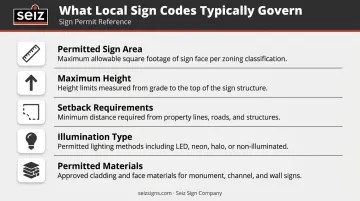
Building identification signs in most U.S. municipalities are governed by local zoning ordinances and building codes. These rules typically cover:
- Permitted sign area (square footage relative to building or lot size)
- Maximum height above grade
- Setback from property lines and rights-of-way
- Illumination type (some residential-adjacent zones restrict brightness or require dimmers)
- Permitted materials in historic or overlay districts
Non-compliance can result in mandatory removal, fines, or failed inspections. And the rules differ substantially between commercial, residential, and industrial zones — sometimes block by block.
Permits and Electrical Requirements
Most building identification signs above a certain size threshold, or involving any electrical component, require a permit before fabrication and installation. Key points:
- Illuminated signs in most jurisdictions require both a sign permit and an electrical permit
- Licensed electrician installation is required for all illuminated signs — in Arkansas, the relevant credential is Specialist Sign Electrician, administered by the Arkansas Board of Electrical Examiners
- UL 48 is the standard for electric sign design and fabrication; NEC/NFPA 70 Article 600 governs installation and wiring
- Permit timelines vary: some municipalities act within 5 business days; others take 20+ business days after a complete application is confirmed — factor this into project schedules, not as an afterthought
For Arkansas clients, Seiz Sign Company manages the full permit process end to end:
- City sign code research and zoning compliance review
- Overlay-district approvals and historic district submissions
- Drawings and structural calculations
- Permit application submission and plan review follow-up
- Inspection scheduling
ADA Considerations
ADA Sections 216 and 703 govern required signs that identify permanent rooms and spaces. Tactile characters and Braille are not automatically required for every exterior building identification sign. ADA scoping applies when the sign falls within specific provisions related to accessible routes and permanent space identification. For exterior signs on paths of travel, legibility requirements around font size, contrast, and non-glare finish apply. Verify which provisions apply to your specific sign type and location before fabrication.
Historic and Overlay Districts
Landmark districts, historic preservation zones, and commercial overlay districts impose additional restrictions on materials, illumination type, sign style, and sometimes color. NPS Preservation Brief 25 addresses preservation considerations for signage in historic contexts. Research these requirements early — not after fabrication has begun. Some historical district installations in Arkansas require landmark commission approval as a separate step beyond the standard sign permit.
How to Choose the Right Building Identification Sign
Choosing the right building identification sign comes down to four practical factors: viewing distance, site constraints, illumination needs, and total cost of ownership. Get those right, and the sign works. Get them wrong, and even a visually striking sign becomes an expensive problem.
Step 1: Start with Viewing Distance
Where are viewers when they first need to identify the building? That answer drives sign type and letter size more than any other factor.
The International Sign Association recommends 1 inch of letter height for every 25 feet of viewing distance as a standard sizing rule. A building on a fast-moving arterial road needs tall, illuminated signage legible from 200+ feet. A building in a walkable downtown corridor may be better served by a blade sign or dimensional plaque readable at 20–30 feet.
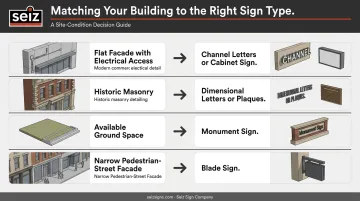
Step 2: Evaluate the Building and Site
Mounting options are constrained by what the building and site can support:
- Flat façade with electrical access → channel letters or cabinet signs
- Historic masonry → dimensional letters or plaques (and check historic district rules)
- Available ground space with suitable soil → monument sign (requires engineered footings)
- Narrow façade on a pedestrian street → blade sign
Step 3: Decide on Illumination
| Factor | Illuminated | Non-Illuminated |
|---|---|---|
| Nighttime visibility | Yes | No (without external lighting) |
| Installation cost | Higher | Lower |
| Maintenance | LED modules, electrical | Minimal |
| Permit complexity | Sign + electrical permit | Sign permit only |
| Best for | 24/7 operations, roadside | Corporate, institutional, historic |
Step 4: Factor in Total Cost of Ownership
Material quality, LED lifespan, weather resistance, and maintenance frequency all affect what a sign costs over 10+ years — often far more than the initial purchase price suggests.
In Arkansas, where the state averages 37 tornadoes annually and severe thunderstorm events can produce 80+ mph gusts or 2.75-inch hail, exterior-rated materials, reinforced structural supports, and engineered footings are the baseline — not an upgrade.
Look for:
- Powder-coated aluminum construction
- UV-stable acrylic faces (ACRYLITE LED sign-grade or equivalent)
- UV overlaminate on any vinyl graphics
- UL-listed LED modules with documented L70 ratings
- Engineered footings for freestanding signs
Common Mistakes to Avoid
Ordering Before Checking Zoning
Signs get built, installed, and then removed — because nobody checked the zoning first. Exceeding permitted sign area, violating illumination restrictions, or triggering a variance requirement can force costly modifications or full removal after the fact. Verify local zoning rules before contacting any fabricator.
Underestimating Total Installed Cost
The fabrication quote is not the project cost. Each sign type carries additional expenses that don't show up on the initial estimate:
- Monument and pylon signs require engineered concrete footings, electrical conduit, and permits
- Channel letters require licensed electrician installation and a separate electrical inspection
- All permitted signs carry inspection fees and, in some municipalities, plan review costs
Selecting a sign type based on the fabrication quote alone leads to budget overruns or a compromised installation.
Using Materials Unsuited for Arkansas Weather
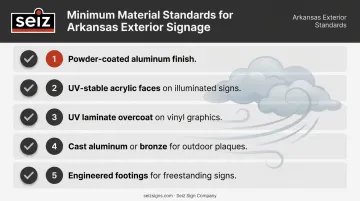
Vinyl graphics on cheap substrates, unsealed aluminum, and inadequate LED protection degrade faster under Arkansas's heat, humidity, and severe weather conditions. Minimum material standards for Arkansas exterior signage:
- Aluminum with powder coat finish (not bare or painted steel)
- UV-stable acrylic faces on illuminated signs
- UV laminate overcoat on all vinyl graphics
- Cast aluminum or bronze for plaques requiring outdoor permanence
- Engineered footings meeting local frost and wind-load requirements for all freestanding signs
Frequently Asked Questions
What are the main types of building identification signs?
The five main types are channel letter signs, cabinet/lightbox signs, monument signs, dimensional letters and plaques, and blade (projecting) signs. The best choice depends on the building type, viewing distance, available mounting surface, and whether illumination is needed.
What signage is required on a building?
Requirements vary by jurisdiction and building use. Most commercial and institutional buildings must display an address number visible from the street — the 2024 IFC requires minimum 4-inch characters. Multi-tenant and healthcare facilities may face additional identification and wayfinding requirements under local code or ADA regulations.
Do building identification signs require permits?
Most exterior building identification signs require a permit, particularly when they exceed a minimum square footage threshold or involve illumination. Permit requirements, fees, and timelines vary by municipality — some jurisdictions process applications in 5 business days, others take 20 or more.
What is the difference between a building identification sign and a business sign?
A building identification sign identifies the structure itself (name, address, ownership) and typically does not advertise products or services. A business sign promotes the business operating inside. Zoning codes often treat these as separate categories with different area allowances, height limits, and illumination rules.
What materials are best for outdoor building identification signs?
The most durable and weather-resistant choices for outdoor use include:
- Powder-coated aluminum and cast bronze or cast aluminum for long-term structural stability
- High-density urethane (HDU) for dimensional letters and carved signage
- UV-stable acrylic with sign-grade inks for illuminated cabinet faces
In Arkansas, UV resistance and structural integrity under wind and hail loads should factor into every material decision.
How long do building identification signs typically last?
Expected lifespans vary by sign type:
- Channel letters and cabinet signs: 10–15+ years; LED module life depends on the module's L70 rating
- Monument signs (masonry or aluminum): decades with minimal maintenance
- Vinyl graphics: 3–7 years, depending on UV exposure and whether a protective overlaminate was applied