This guide breaks down the practical differences between fleet body wraps and perforated vinyl window wraps — cost ranges, ROI math, material durability, and which option fits which business scenario.
Key Takeaways
- Fleet wraps cover vehicle body panels with printed vinyl for broad mobile impressions
- Window wraps use perforated vinyl on glass for targeted or supplemental brand coverage
- A single wrapped vehicle generates an estimated 30,000–70,000 daily impressions, making fleet wraps one of the lowest-cost advertising media available
- Full fleet wraps typically run $2,500–$8,000+ per vehicle depending on size; window wraps carry lower entry costs with a shorter lifespan
- Fleet wraps last 5–7 years (printed); perforated window films last 1–4 years depending on material grade
- The two formats work best together: body wraps plus rear window perforated vinyl deliver complete vehicle coverage
Fleet Wraps vs. Window Wraps: Quick Comparison
| Dimension | Fleet Body Wraps | Window Wraps |
|---|---|---|
| Cost | $2,500–$8,000+ per vehicle | Lower entry cost; priced by sq. footage |
| Coverage Area | Full body panels, hood, roof | Vehicle glass or storefront windows only |
| Daily Impressions | 30,000–70,000 (mobile routes) | Fixed location foot/vehicle traffic |
| Durability | 5–7 years (printed, with laminate) | 1–4 years depending on film grade |
| Best Use Case | Mobile service fleets, delivery, contractors | Storefronts, seasonal promos, fleet complement |
Many businesses combine both — fleet wraps on body panels and perforated vinyl on windows — to maximize coverage across the entire vehicle. Service companies and delivery fleets in particular tend to get the most mileage from this approach, turning every surface into visible branding.
What Are Fleet Wraps?
Fleet wraps are large-format printed vinyl graphics applied directly over a vehicle's painted body panels — doors, hood, roof, and rear. A full wrap covers the entire exterior; a partial wrap targets specific panels like the tailgate, doors, or sides. The core appeal is straightforward: once installed, a wrapped vehicle works as a moving billboard at zero recurring cost. Every job site, traffic light, and parking lot becomes a brand impression.
Research cited by 3M attributes 30,000–70,000 daily vehicular impressions per wrapped vehicle to a 2003 ARD Ventures study. A separate 3M/Snapple fleet study tracking 10 wrapped trucks over three months calculated 6 million annualized impressions per vehicle.
Materials: Cast vs. Calendered Vinyl
The vinyl type used determines how long a fleet wrap lasts and how well it conforms to curved vehicle surfaces.
| Property | Cast Vinyl | Calendered Vinyl |
|---|---|---|
| Thickness | 1–2 mil | 2.5–4 mil |
| Conformability | Excellent — handles compound curves | Limited — best on flat surfaces |
| Outdoor durability | 7–10 years (unprinted); 5–7 years (printed) | 3–6 years |
| Recommended use | Full vehicle wraps | Flat trailers, short-term graphics |
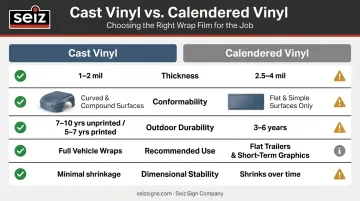
Cast vinyl is the correct choice for fleet wraps on curved vehicle panels. Calendered vinyl costs less upfront but is prone to edge lifting and shrinkage on bumpers, mirrors, and door handles.
A properly installed wrap — cast vinyl with a laminate overcoat, as Seiz Sign Company uses — also protects factory paint from UV damage, minor abrasions, and road debris, which preserves vehicle resale value over time.
Fleet Wrap Use Cases
Industries that consistently get strong ROI from fleet wraps:
- Service contractors (HVAC, plumbing, electrical, landscaping, pest control) running daily routes through neighborhoods
- Delivery and food service businesses with vehicles in residential and commercial areas all day
- Healthcare providers operating mobile services or visiting staff vehicles
- Franchise businesses that need uniform brand presentation across regional or national fleets
The compounding effect matters. Five consistently wrapped vans driving Hot Springs routes daily create the "they're everywhere" impression that a single vehicle can't replicate.
What Are Window Wraps?
Window wraps use perforated vinyl — also called one-way vision film — printed with graphics and applied to vehicle glass or commercial storefront windows. Small holes punched through the material allow people inside to see out while displaying a full-color image to viewers outside.
That perforation unlocks advertising space that standard fleet body wraps leave unused. For storefronts, a large glass facade becomes a high-visibility display. For vehicles, rear and side windows extend branding onto surfaces that body wraps can't reach.
How Perforation Ratios Work
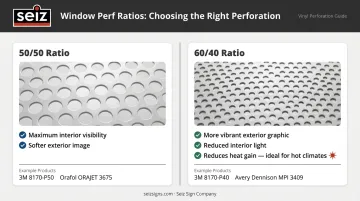
The hole pattern directly affects both graphic quality and interior light transmission:
- 50/50 ratio: Maximum see-through from inside; slightly softer exterior image. Used in 3M 8170-P50 and Orafol ORAJET 3675.
- 60/40 ratio: More vibrant exterior graphic; less interior light. Used in 3M 8170-P40 and Avery Dennison MPI 3409.
For Arkansas storefronts dealing with intense summer sun, the 60/40 ratio also meaningfully reduces interior heat gain — a real bonus beyond the branding value.
At Seiz Sign Company, perforated vinyl window installations are led by Graphics Production Manager Jorge Barboza, who has specialized in this application since joining the company in 2002. His experience covers both small storefront graphics and full rear-window vehicle treatments — the same person handles your project whether it's a single shop window or an entire delivery fleet.
Window Wrap Use Cases
- Retail storefronts with large glass facades needing year-round brand presence
- Restaurants running seasonal menu promotions that require easy graphic updates
- Office buildings combining privacy glass with exterior branding
- Service vans and delivery vehicles — rear window branding extends coverage from body wraps
- Temporary campaigns where easy removal and replacement matter
Cost & ROI: Which Option Delivers More Value?
Fleet Wrap Cost Ranges by Vehicle
| Vehicle Type | Full Wrap Range | Partial Wrap Range |
|---|---|---|
| Sedan / Coupe | $2,500–$4,000 | $1,500–$2,300 |
| Pickup Truck | ~$3,900 | $1,500–$2,300 |
| Cargo Van (Sprinter/Transit) | $3,500–$6,000 | $1,500–$3,000 |
| Box Truck | $4,000–$8,000+ | Varies by panel |
| 53-ft Trailer | $5,000–$10,000+ | — |
Source: Lee's Signs Vehicle Wrap Cost Guide, March 2025; Sign Builder Illustrated, February 2025. Fleet volume discounts of 10–30% are common.
Premium cast vinyl materials from brands like 3M, Avery Dennison, and Arlon affect both price and longevity. Seiz Sign Company uses cast vinyl with a laminate overcoat, rated for 5–7 years outdoors — longer for garage-parked vehicles.
The CPM Case for Fleet Wraps
The most compelling ROI argument for fleet wraps is cost per thousand impressions (CPM). Data from the 3M/Snapple fleet study puts fleet wrap CPM at $0.48, compared to:
- Billboards: $3.56
- Online/digital ads: $21.00
- Television: $23.70
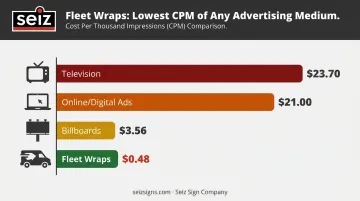
A $4,000 van wrap lasting five years costs roughly $2.19 per day — before accounting for the thousands of impressions generated along every route.
Window Wrap ROI Considerations
Window wraps carry lower upfront material costs (perforated film is typically calendered, not cast) but have a shorter lifespan — 1–4 years depending on film grade, versus 5–7 years for body wraps. That shorter cycle affects the total cost-of-ownership calculation.
Storefront ROI hinges on foot traffic and pass-by volume at a fixed location rather than mobile route coverage. A restaurant on a busy Hot Springs corridor can generate brand impressions around the clock from window graphics alone — no vehicle required.
On vehicles, window wraps extend reach at a lower incremental cost when added to an existing fleet program.
The Combination Strategy
Full-vehicle coverage — body wrap on panels, perforated vinyl on windows — gives businesses in competitive service markets the widest possible brand reach from a single vehicle. Seiz's in-house workflow handles both surfaces from the same design files and production team, so graphic continuity across body panels and glass is built in from the start.
Which Option Is Right for Your Business?
Choose Fleet Body Wraps If:
- You operate 2+ commercial vehicles traveling high-traffic routes daily
- You're in a competitive service trade — HVAC, plumbing, landscaping, contracting, food service
- You want paint protection as a secondary benefit alongside advertising
- Brand consistency across your fleet is a priority
Choose Window Wraps If:
- You have a retail storefront or restaurant with substantial glass window area
- You need low-cost supplemental vehicle branding alongside an existing wrap
- You run seasonal promotions requiring periodic graphic changes
- You want to maximize every square inch of an already-wrapped vehicle
A Real-World Arkansas Scenario
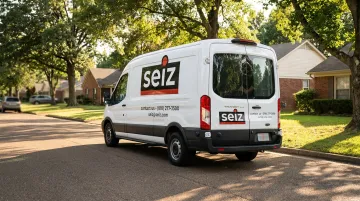
Consider a Hot Springs-area service contractor running five HVAC vans. Full fleet body wraps on each van put the company's brand in front of thousands of residents on daily service routes throughout Garland County. Adding perforated vinyl to each van's rear window extends the design across the full vehicle and turns every stop sign and traffic light into a branding moment for drivers behind them. Total investment is higher, but so is coverage — and the cost-per-impression typically beats most traditional print and local digital alternatives at scale.
Contrast that with a downtown Hot Springs restaurant. Large storefront windows facing Central Avenue handle the branding work without any vehicle investment required. Perforated vinyl across the glass displays the menu and brand identity to every person walking or driving past — day and night.
Both scenarios are the kind of work Seiz Sign Company handles entirely in-house: design, large-format printing up to 16 feet wide, and professional installation by Jorge Barboza's team. For fleet projects, mobile installation is available throughout Arkansas — vehicles don't need to come to Hot Springs for wrapping.
With over 115 years of signage experience, the team can walk through coverage options, material recommendations, and realistic cost expectations before you commit to anything.
Ready to explore fleet or window wrap options for your Arkansas business? Call Seiz Sign Company at (501) 623-3181 or visit them at 1231 Central Avenue, Hot Springs.
Conclusion
Fleet wraps and window wraps solve different problems. Fleet wraps are the foundation of mobile brand advertising — high impression volume, long lifespan, and paint protection built in. Window wraps are a flexible, lower-cost option for storefronts and a smart complement to existing fleet programs. They work best when chosen for the right job — or used together.
Compared to traditional advertising, both formats deliver strong cost-per-impression value, project professionalism, and run continuously without recurring media spend. A well-planned wrap strategy — whether fleet only, window only, or combined — gets cheaper to run every year, as the upfront cost spreads across an ever-growing impression count. For Arkansas businesses ready to explore either option, Seiz Sign Company handles vehicle wraps and vinyl window graphics statewide, from design and printing through installation.
Frequently Asked Questions
What is the best brand of car wraps?
The leading professional-grade brands are 3M, Avery Dennison, and Arlon for fleet body wraps, and 3M and Orafol for perforated window film. The right choice depends on the application — cast vinyl for complex vehicle curves, specialized perforated film for glass surfaces. Professional installation matters as much as the brand.
Which vinyl wrap lasts the longest?
Cast vinyl from 3M (IJ180 series) or Avery Dennison (MPI 1105 SuperCast) offers the longest rated lifespan: up to 7–10 years unprinted, or 5–7 years for printed fleet graphics with a qualified laminate. Perforated window films typically last 1–4 years depending on grade and should be budgeted for more frequent replacement.
How much does a fleet wrap cost per vehicle?
Full fleet wraps generally range from $2,500 for a compact car to $8,000+ for a box truck, with vehicle size, coverage area, and design complexity as the main cost drivers. Fleet volume discounts of 10–30% are common for multi-vehicle programs. Call Seiz Sign Company at (501) 623-3181 for a project-specific quote.
Can window wraps be seen through from inside a vehicle or building?
Yes. Perforated vinyl (one-way vision film) displays a full graphic to outside viewers while allowing clear outward visibility from inside. How clear depends on the perforation ratio (50/50 allows more light than 60/40) and the difference in light levels between interior and exterior.
Do fleet wraps protect a vehicle's original paint?
Yes. Fleet wraps shield paint from UV rays, minor abrasions, and road chips for as long as the wrap stays applied. Professional removal with proper heat tools typically reveals factory paint in better condition than comparable unwrapped vehicles — as long as the original paint was OEM and in good condition before installation.
Can I use fleet wraps and window wraps together on the same vehicle?
Yes — fleet body wraps and perforated vinyl window wraps are designed to work together. Coordinating both surfaces is straightforward when design files are built to vehicle-specific templates from the start. Seiz Sign Company handles both through the same in-house design and production workflow, ensuring visual continuity across every panel and glass surface.